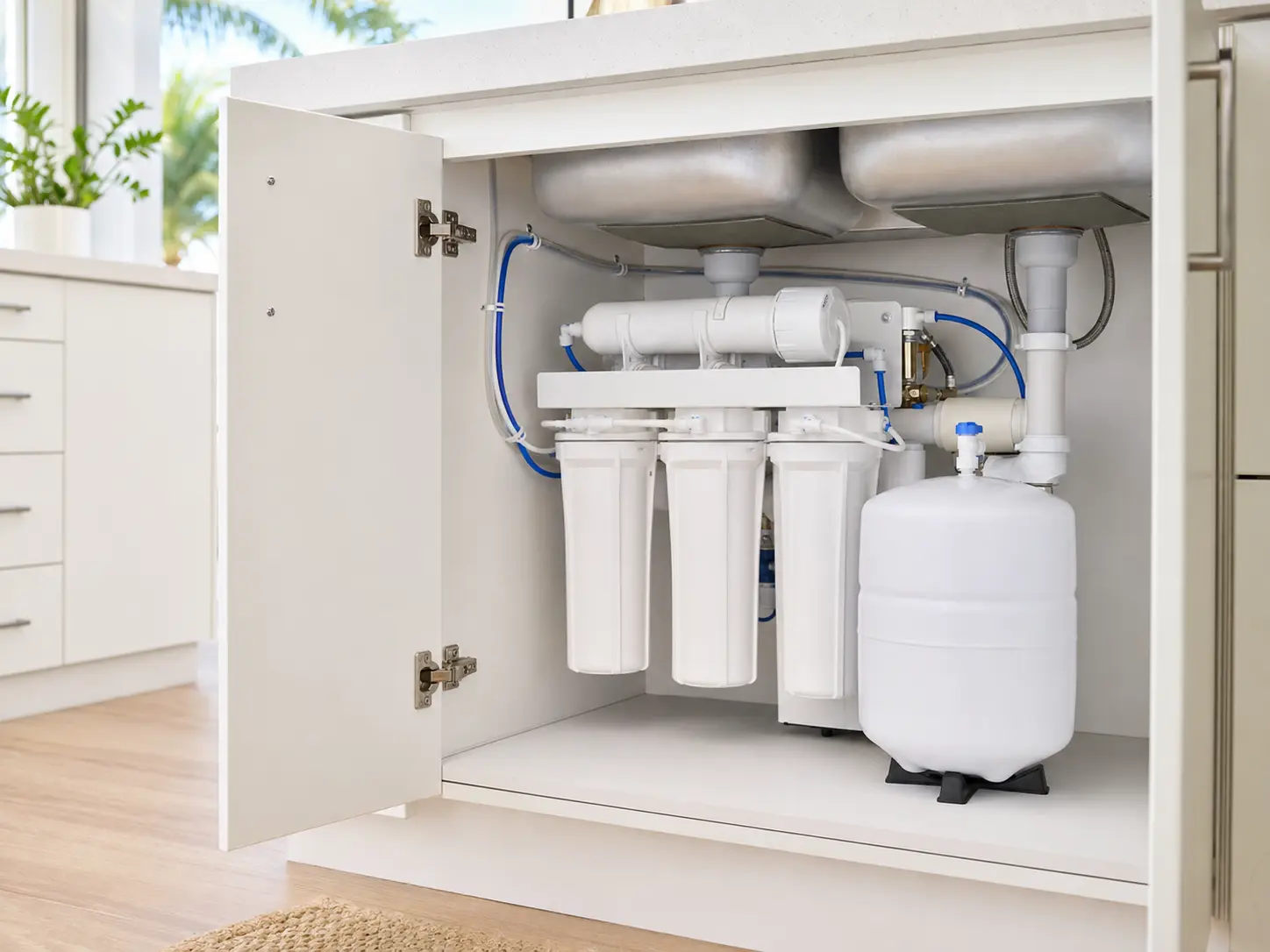
PFAS is a large family of persistent chemicals. Treatment claims should be specific: a filter that improves taste is not automatically proven to reduce the PFAS compounds you care about.
EPA identifies granular activated carbon, ion exchange and reverse osmosis among treatment technologies used for PFAS. For a homeowner, the practical question is which certified product fits the desired fixtures, flow and maintenance plan.
Start with data, not fear
Review your utility report and any PFAS-specific notices. Private-well owners may need laboratory testing from an appropriate accredited lab.
Testing and treatment should focus on relevant compounds and a clear exposure pathway rather than broad claims about 'forever chemicals.'
Granular activated carbon
GAC adsorbs PFAS onto the carbon surface. Performance varies by compound, carbon type, bed depth, competing organic matter and how long water contacts the media.
A whole-home carbon tank can hold much more media than a faucet cartridge, but it still needs a defensible sizing and replacement strategy.
Ion exchange
Specialized anion-exchange resins can capture PFAS and may be used in utility or point-of-entry applications. Resin selection and disposal require professional planning.
A hardness softener is also an ion-exchange device, but ordinary softening resin should not be assumed to provide verified PFAS reduction.
Reverse osmosis
RO can provide strong point-of-use reduction for many PFAS when the system is properly designed and maintained. It is often considered for drinking and cooking water.
Check the exact certification or manufacturer test data, production capacity and filter schedule.
Certification and maintenance
Look for third-party certification covering the claim you need. Certification standards evolve, so confirm the current listing for the exact model rather than relying on marketing language.
Replace filters and membranes according to the manufacturer’s instructions. Exhausted media can no longer be assumed to perform as intended.
Common questions
Frequently asked questions
Does every carbon filter remove PFAS?
No. Performance depends on the carbon, system design, flow, PFAS compound and maintenance. Look for a relevant verified claim for the exact product.
Is whole-home PFAS filtration necessary?
That depends on verified water data and your goals. Many households prioritize point-of-use treatment for drinking and cooking water.
Can I test PFAS with a home strip?
PFAS analysis generally requires specialized laboratory methods. Use an appropriately accredited laboratory and follow its sampling instructions.