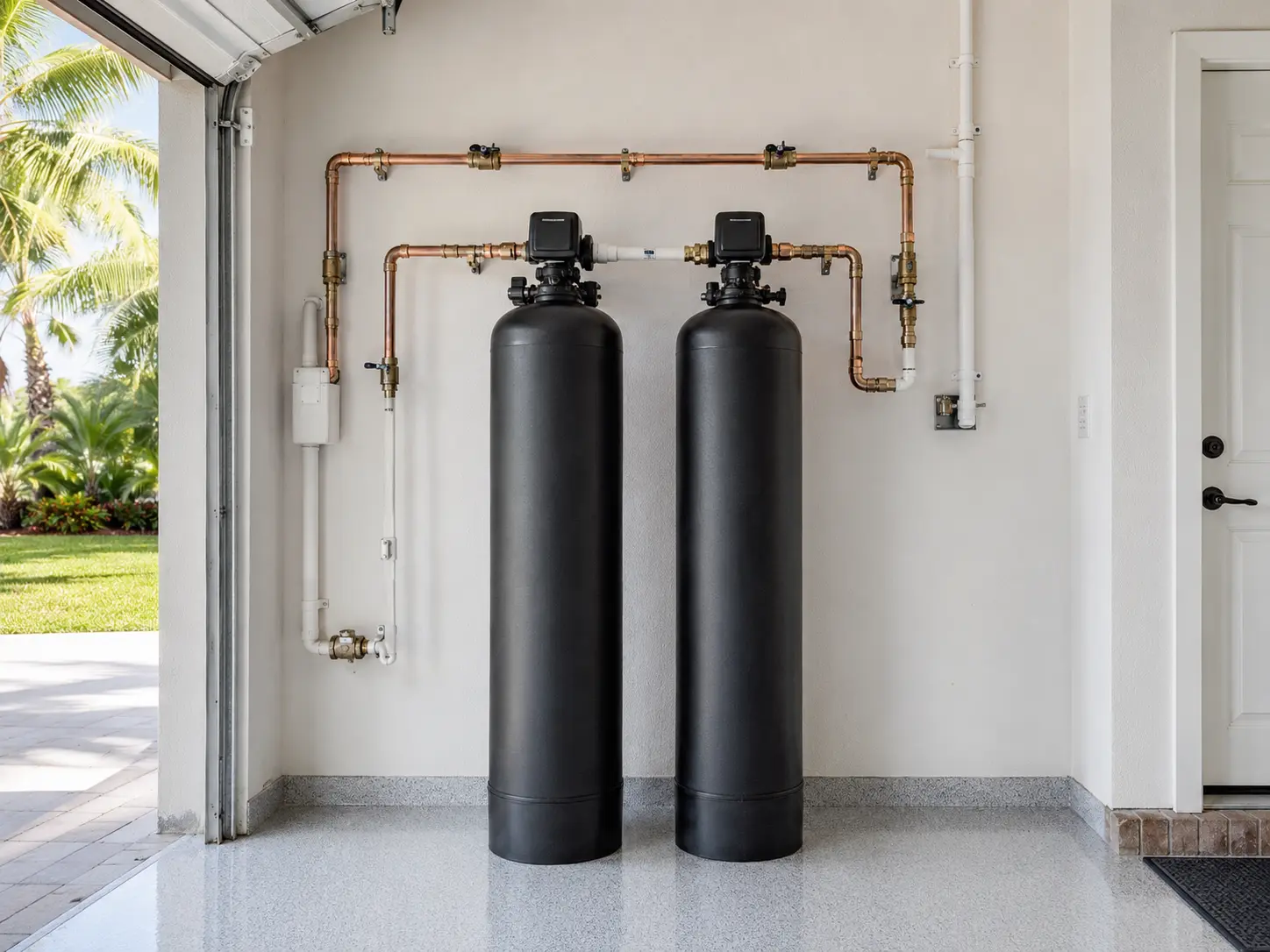
Whole-home filtration is lower-maintenance than a small cartridge at every fixture, but it is not maintenance-free. Pressure, leaks, prefilters, valve operation and media age all deserve attention.
A simple system record prevents guesswork when the original installer or homeowner changes.
Monthly visual check
Look for moisture, corrosion, unusual valve displays, damaged insulation or impact around the equipment. Confirm the bypass remains in the intended position.
A slow leak is easier to fix before it damages walls or flooring.
Monitor pressure and flow
A sudden flow reduction can come from a loaded prefilter, valve problem or unrelated plumbing issue. Baseline pressure readings make troubleshooting easier.
Never assume low pressure means the carbon is exhausted; diagnose the restriction.
Service prefilters
Sediment cartridges protect downstream equipment but can become restrictive. Replacement interval depends on loading, size and household flow.
Record the date and condition of each removed filter to refine the schedule.
Plan for media replacement
Carbon life is not determined by calendar age alone. Water volume, disinfectant concentration, organic loading and system design influence capacity.
Ask the equipment provider for the basis of its replacement recommendation and the expected service procedure.
Maintain a system file
Keep the model numbers, valve settings, media type and quantity, plumbing photos, warranties and service dates together.
This information makes it easier for any qualified technician to service the system accurately.
Common questions
Frequently asked questions
How often is whole-house carbon replaced?
There is no universal interval. It depends on media quantity, water conditions, use and the manufacturer or system designer’s capacity assumptions.
Can I bypass the system during service?
Most professionally installed systems include a bypass. Follow the valve instructions and avoid forcing unfamiliar controls.
Why did my water pressure drop?
Possible causes include a loaded prefilter, valve restriction, plumbing issue or high simultaneous demand. A qualified technician should diagnose the cause.