
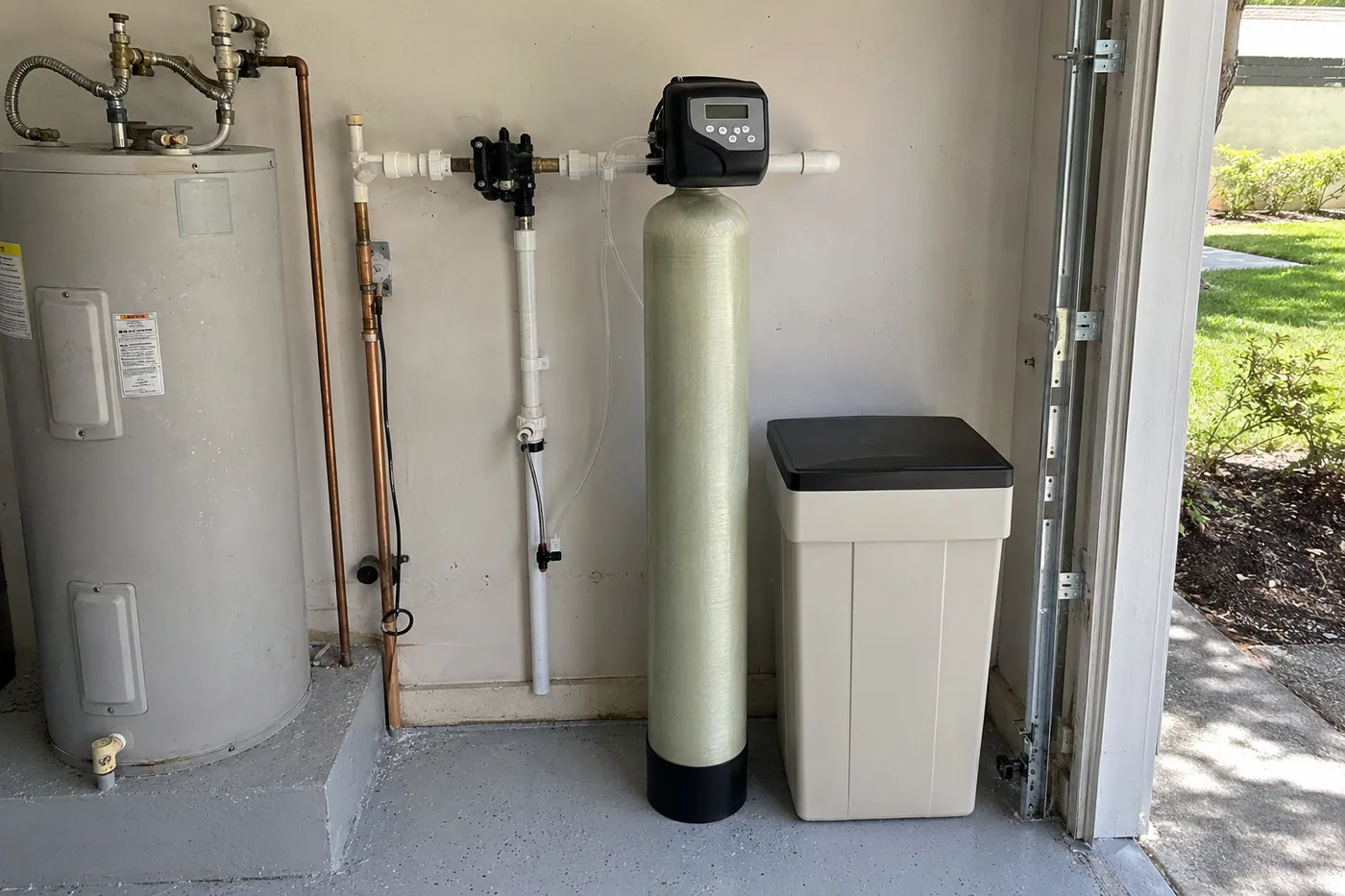
Softener and conditioner are often used as if they mean the same thing, but the treatment methods and expected results can be very different.
The comparison should begin with measured hardness and the exact outcome you expect: hardness removal, scale control, easier cleaning or a change in water feel.
What a traditional softener does
Ion-exchange resin replaces hardness ions and periodically regenerates with brine. The result is measurable hardness reduction when the system is sized and programmed correctly.
It requires salt replenishment, a drain and appropriate discharge planning.
What conditioner can mean
Conditioner is a broad marketing term. Some systems aim to alter mineral behavior to reduce scale formation without removing hardness.
Ask for the exact technology, verified testing and expected result at your measured hardness level.
How the household experience differs
A softener can change soap performance, spotting and measured hardness. A conditioner may leave hardness minerals in the water, so test strips can still show hardness.
Decide whether you want removal or scale management before comparing warranties.
Questions to ask before buying
Request capacity, flow rating, testing, maintenance, warranty exclusions and a clear explanation of what changes in the water.
Avoid any proposal that promises every benefit without defining a measurable claim.
Common questions
Frequently asked questions
Does a salt-free conditioner soften water?
Many do not remove hardness minerals. Verify the exact technology and whether the claim is hardness reduction or scale control.
Which option reduces white spots?
Ion exchange directly reduces hardness. Conditioner results vary, so review testing and realistic expectations.
Can either option remove chlorine?
Not by itself unless carbon filtration is included as a separate treatment stage.