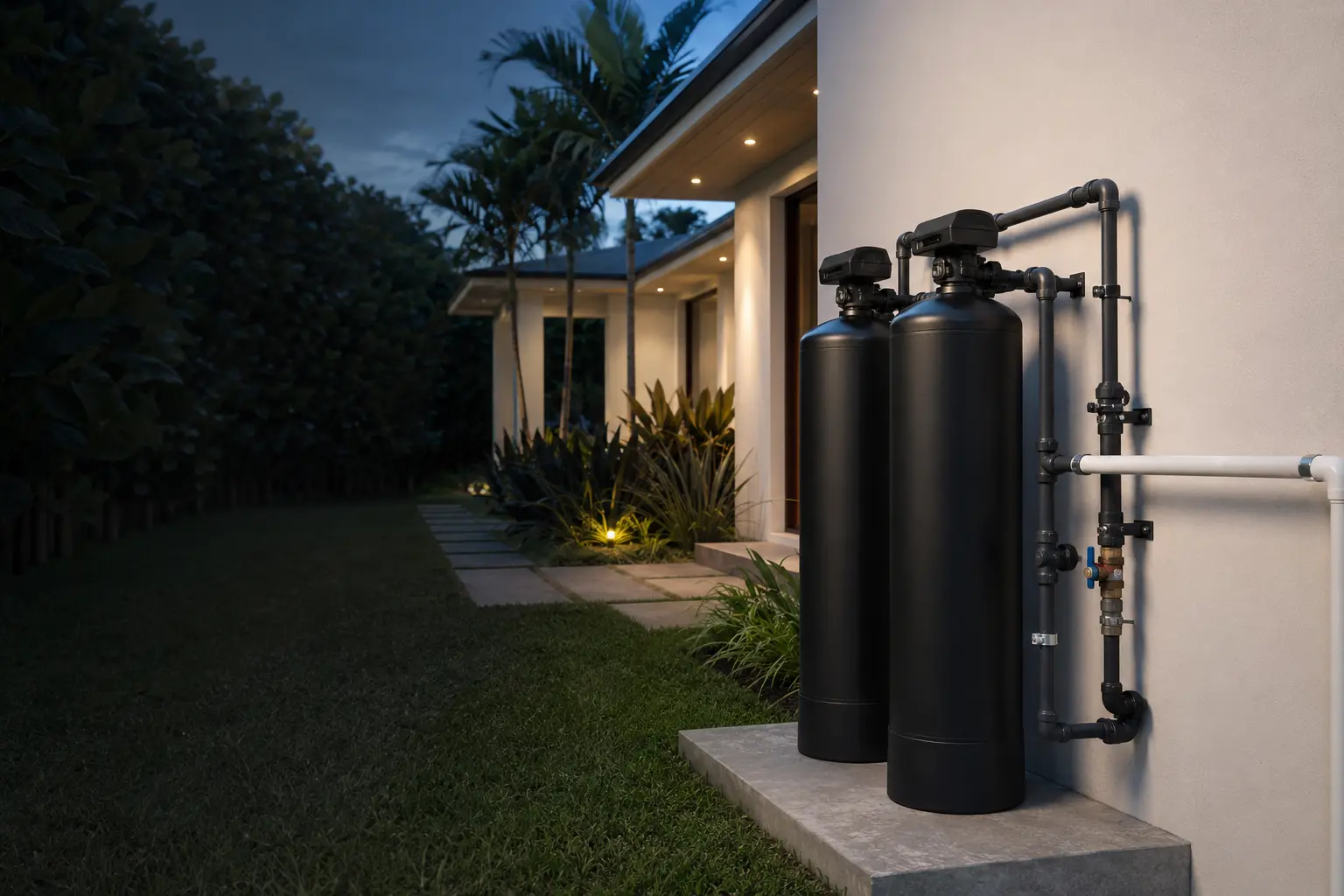
Private-well water should not be treated from symptoms alone. Odor, staining and sediment offer clues, but a laboratory result and well-system assessment are the basis for a responsible design.
Municipal-water equipment packages may be poorly matched to iron, sulfur, bacteria, salinity or variable well flow.
Build the right testing panel
Testing should reflect local risks, property history and the intended use of the water. A laboratory or qualified water professional can help select parameters.
Collect samples before treatment and follow the laboratory’s preservation and transport instructions.
Common treatment categories
Sediment filtration, oxidation and filtration, activated carbon, softening, disinfection and RO can each play a role. The sequence matters because one stage may protect or interfere with another.
No single tank should be assumed to solve every well-water problem.
Flow and pressure matter
Backwashing filters require adequate flow. Well-pump capacity, pressure-tank condition and peak household demand influence whether the system can operate correctly.
An oversized backwashing unit may fail if the well cannot supply the required rate.
Bacteria and disinfection
A positive bacteriological result requires prompt attention to the well, plumbing and disinfection plan. A filter alone may not correct the source of contamination.
Use guidance from health authorities or qualified well professionals and verify results after corrective action.
Ongoing testing and service
Private wells do not receive the same utility monitoring as public systems. Keep a testing schedule appropriate to your property and any prior results.
Record media, settings and service dates so changes in water quality can be investigated.
Common questions
Frequently asked questions
Can a whole-house carbon filter treat well water?
Carbon may address certain taste, odor or organic concerns, but it should not be selected until testing identifies the treatment goals and pretreatment needs.
What causes rotten-egg odor?
Hydrogen sulfide is one possibility, but odor can also arise from plumbing or a water heater. Diagnose the source before choosing treatment.
Do private wells need annual testing?
Testing frequency depends on local guidance and property conditions. Ask the relevant health authority or laboratory which parameters and schedule apply.